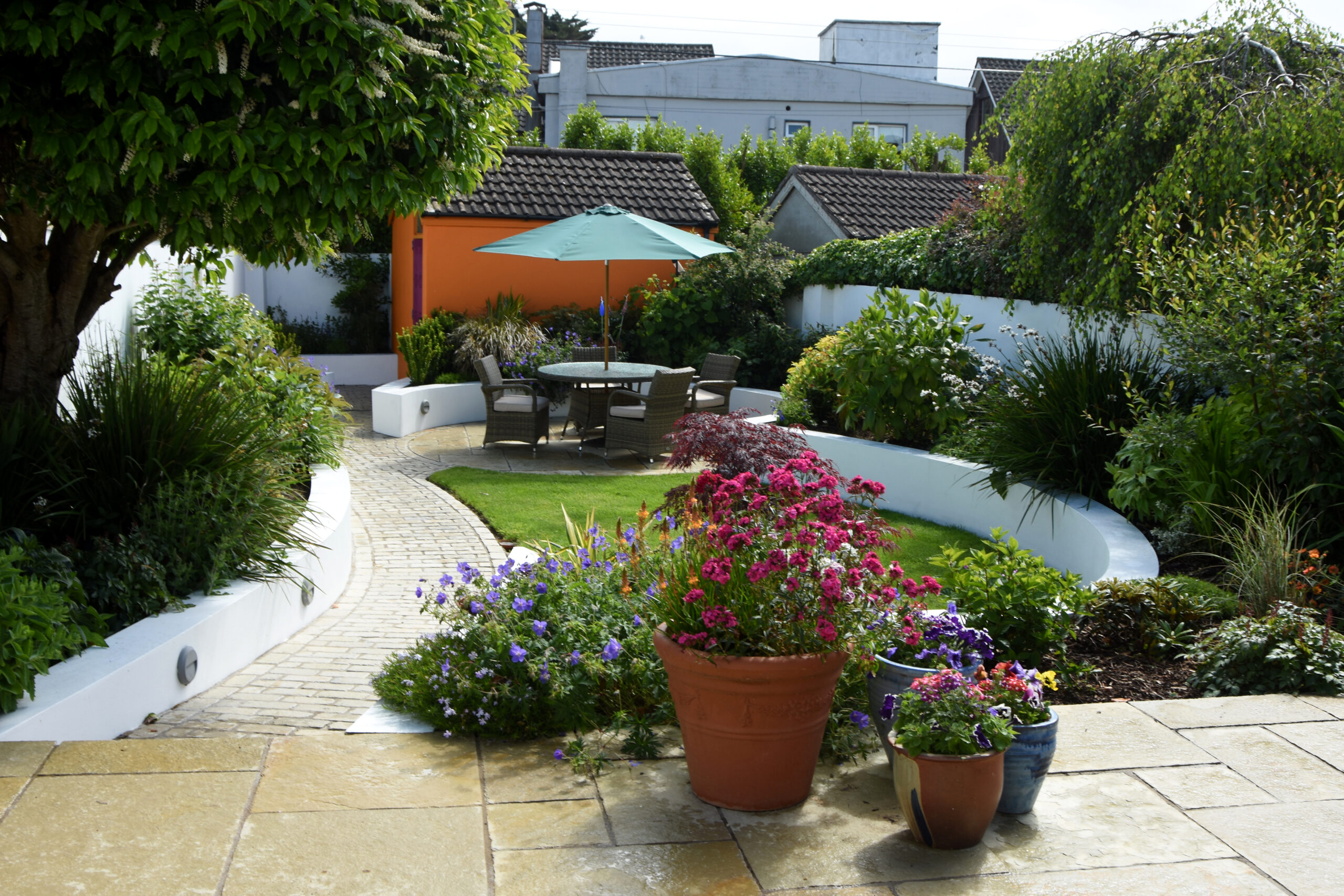
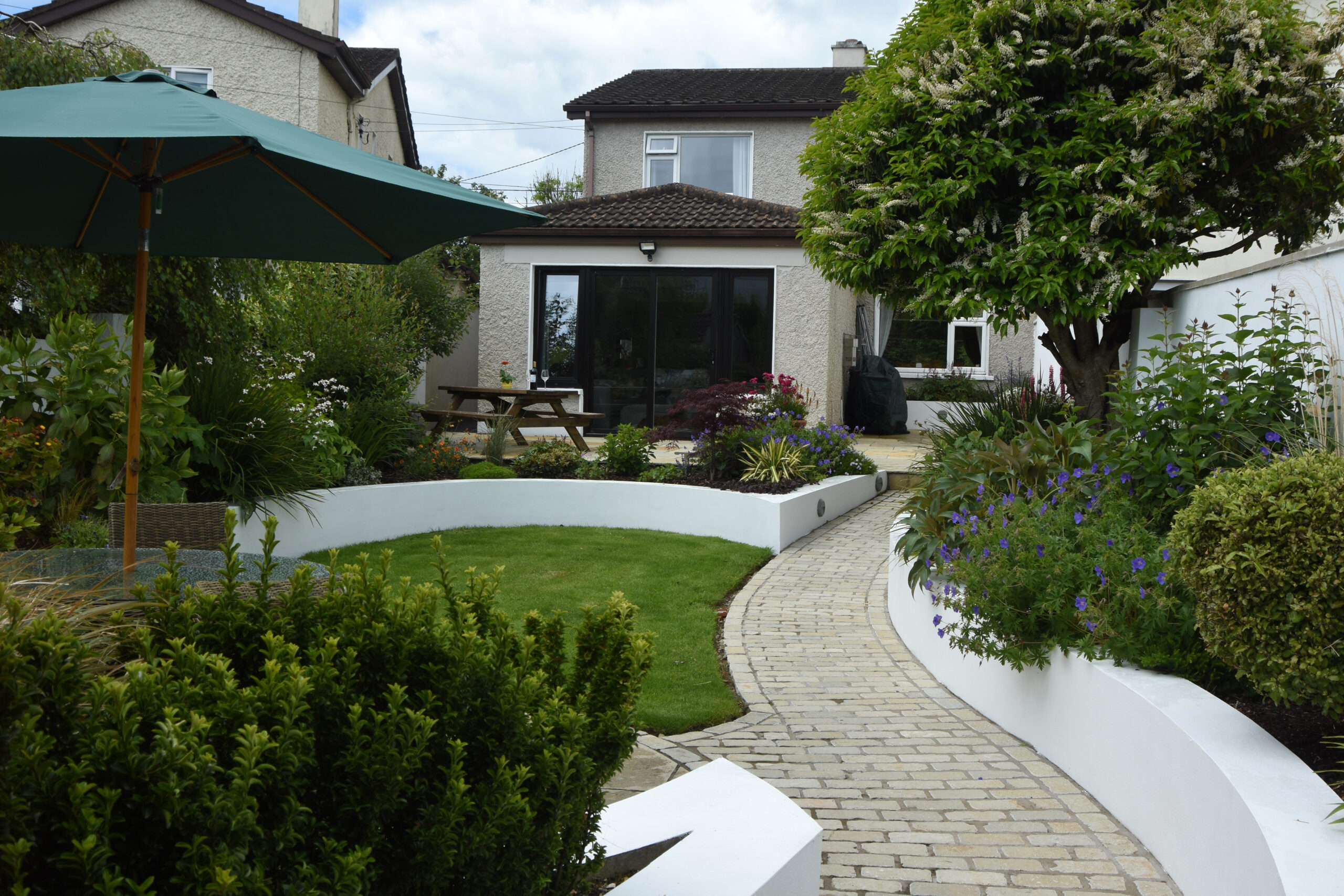
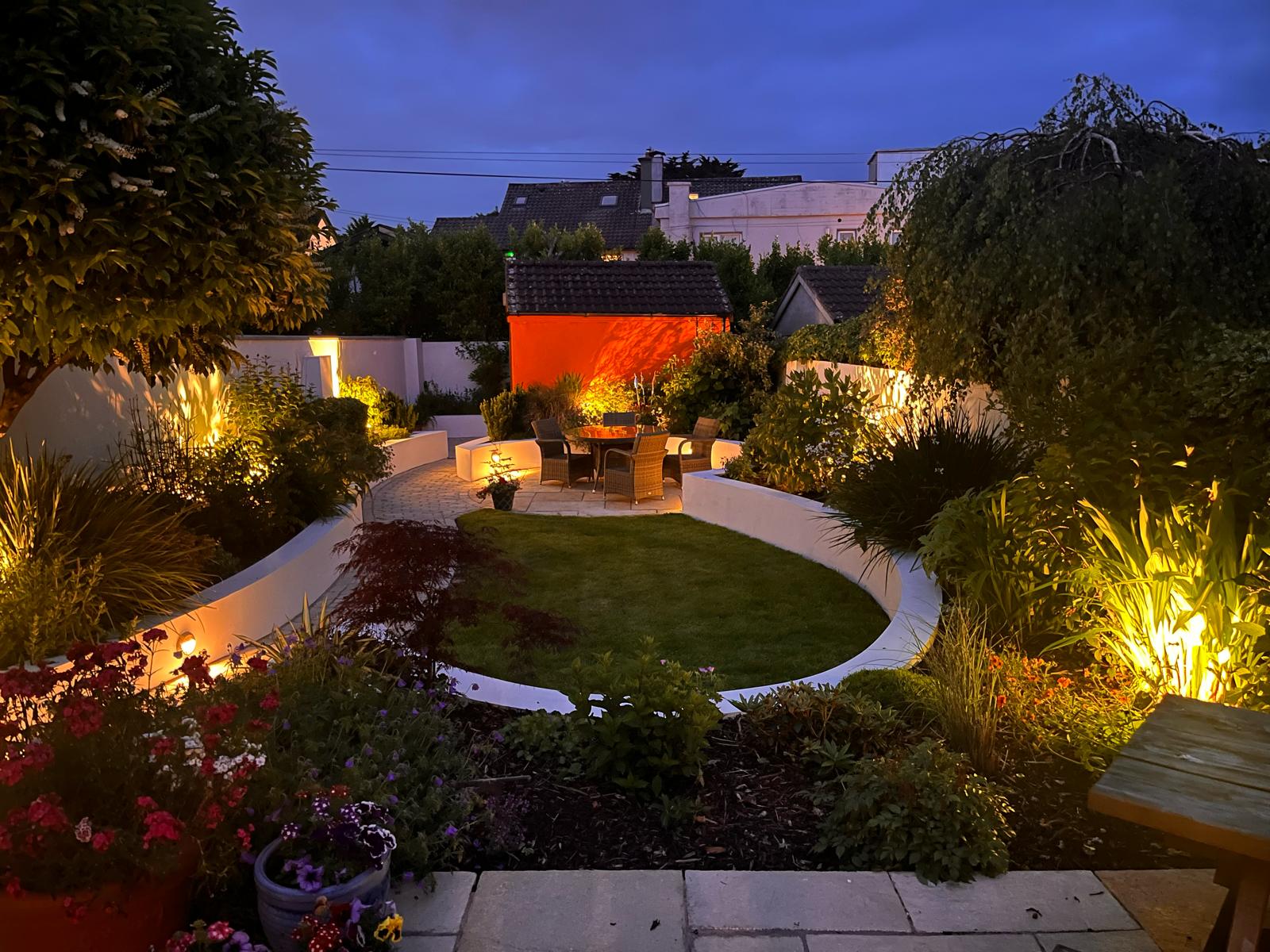
Stepping through the French doors, the first change becomes immediately clear: a warm, welcoming upper terrace paved in yellow limestone that establishes a cleaner, more usable transition from house to garden. From this space, a gently sloped granite-cobble path now leads down toward the lawn, supported by a curved retaining wall with soft, layered planting. This simple move improves accessibility, introduces structure, and guides visitors naturally into the heart of the garden.
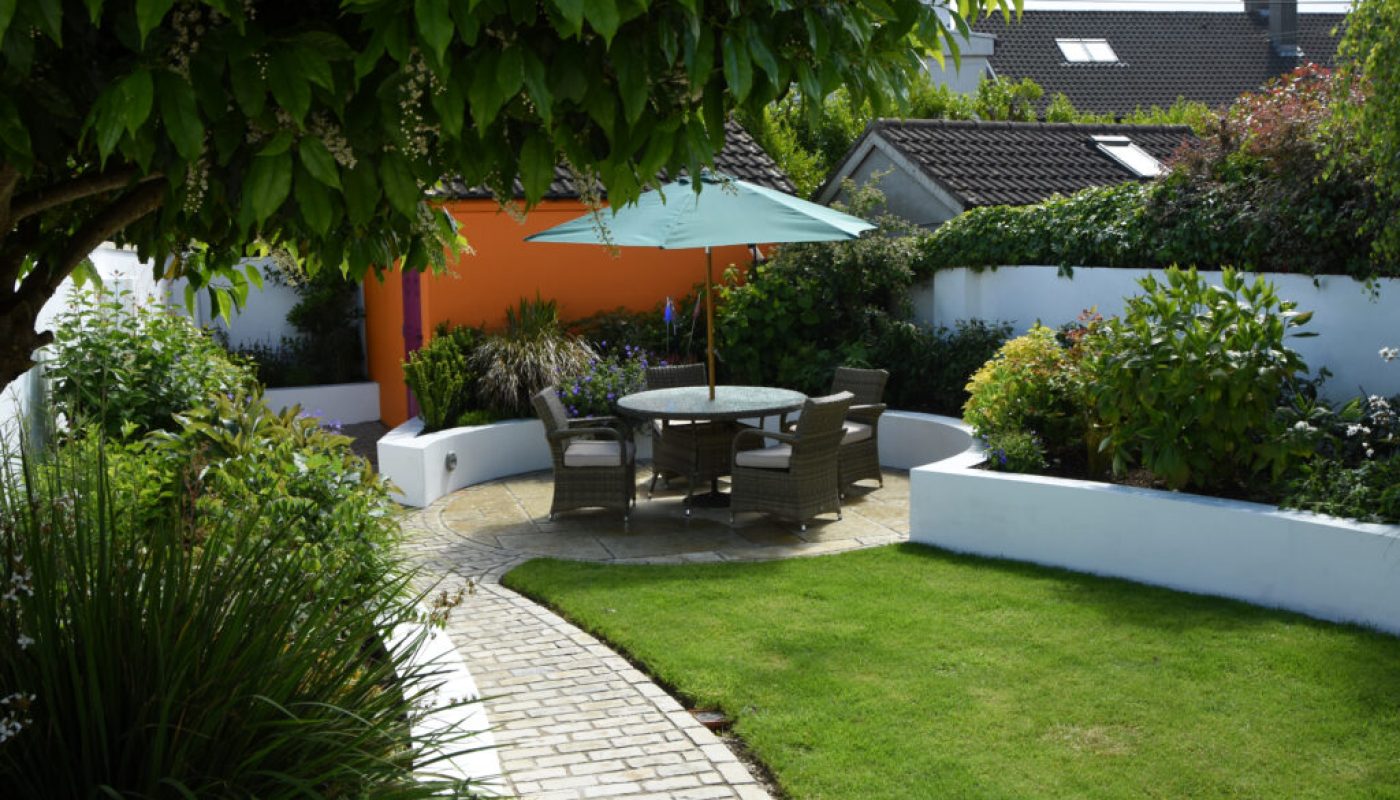
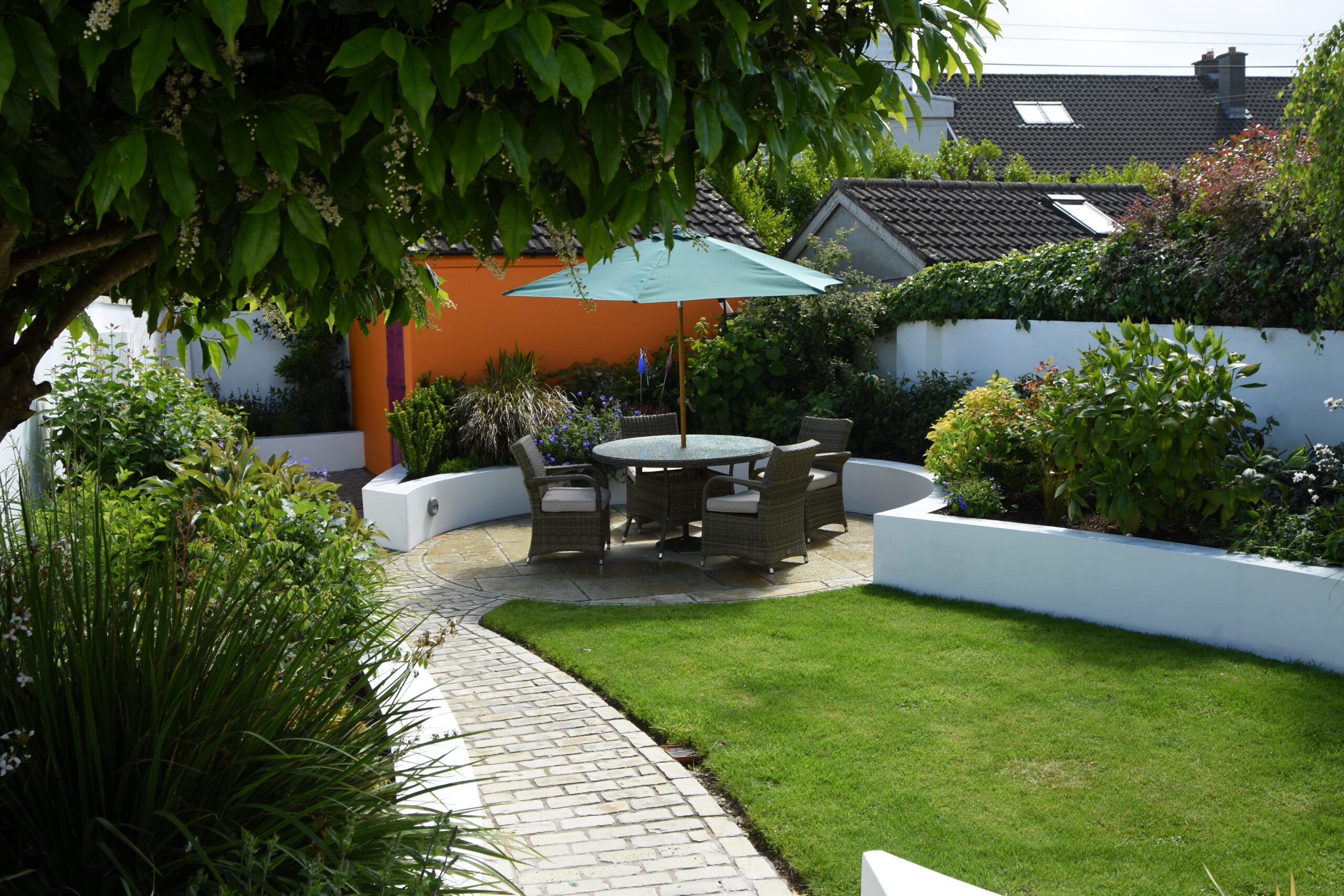
Further in, the redesigned circular patio—also paved in yellow limestone—creates a second, more intimate destination. Enclosed by a crisp white retaining wall and lush planting, it offers shelter from the wind and captures sunlight throughout the day. It has quickly become the garden’s standout feature, offering a reliable spot for coffee, reading, or small gatherings.
Toward the rear, the garden shed with its terracotta finish brings warmth and character to what was previously an overlooked area.
A small cobbled courtyard in front of the shed links it to the rest of the garden and adds everyday practicality for storage and access. New garden lighting has extended the use of the space into the evening, giving the garden a comfortable ambiance after dark and making key routes and areas feel safer and more inviting.
Biodiversity was another significant part of the transformation. A resilient planting palette—chosen specifically for the West of Ireland climate—ensures seasonal interest from early spring to late autumn, while shrubs, grasses and bulbs keep the garden engaging through winter. The space now supports noticeably more pollinators, with increases in bees, butterflies and even dragonflies.
Overall, the design has made the garden easier to move through, simpler to maintain, and far more enjoyable year-round. What was once a standard suburban space is now a calm, private retreat with clear structure, strong planting, and a far greater sense of purpose and comfort.